
Sub-Total: $0.00
How Many Shockwave Therapy Sessions Do You Need? Results, Recovery, and What to Expect in Houston
Most patients need 3 to 6 shockwave therapy sessions, spaced about one week apart, to treat a chronic tendon or soft tissue problem. Each visit takes 15 to 30 minutes, and many people notice relief after 2 or 3 sessions, with improvement continuing for weeks to a few months as tissue heals. Learn more about shockwave therapy in Houston, TX, review our shockwave therapy cost guide, or book a complimentary consultation to get a plan for your condition.
How Many Shockwave Therapy Sessions Do Most Patients Need?
Most patients need 3 to 6 shockwave therapy sessions, typically scheduled about one week apart. This spacing gives the treated tissue time to respond between visits, since shockwave therapy works by stimulating blood flow and the body’s natural repair process rather than providing a one-time fix. A shorter course of 3 sessions is often enough for a recent or milder problem, while a longer-standing condition may need 5 or 6. Common reasons people seek care include plantar fasciitis, Achilles tendinopathy, tennis elbow, rotator cuff tendinopathy, and patellar tendon pain. Your provider will recommend a starting number after evaluating your condition, then adjust the plan based on how you respond. That way, you receive enough sessions to support healing without paying for visits you do not need.
What Factors Affect How Many Shockwave Therapy Sessions You Need?
The number of shockwave therapy sessions you need depends mainly on your condition, how long you have had it, how severe it is, your activity level, and how well you follow home care. A tendon problem that has lingered for a year or more usually takes longer to respond than one that started a few months ago. More severe pain or tissue changes may also call for additional visits. Highly active people, such as runners or athletes, sometimes need a longer course because they place more demand on the injured area. Adherence matters too. Patients who follow stretching, strengthening, and activity guidance between sessions often progress more smoothly. General health, body weight, footwear, and work demands can play a role as well. Your provider considers all of these factors when building your plan.
When Will You Notice Results from Shockwave Therapy?
Many patients notice relief after 2 to 3 shockwave therapy sessions, and improvement often continues for weeks to a few months after the final session as the tissue heals. Some people feel a short-term decrease in pain soon after a visit, while others notice gradual changes, such as easier first steps in the morning or less discomfort during exercise. Because shockwave therapy supports a biological healing process, the full benefit is usually not felt on the last day of treatment. It is normal for progress to come in small steps rather than all at once. Results vary from person to person, and a few patients respond more slowly. Tracking your pain and activity levels between sessions helps you and your provider see how well the treatment is working.
What Should You Expect at Each Shockwave Therapy Session?
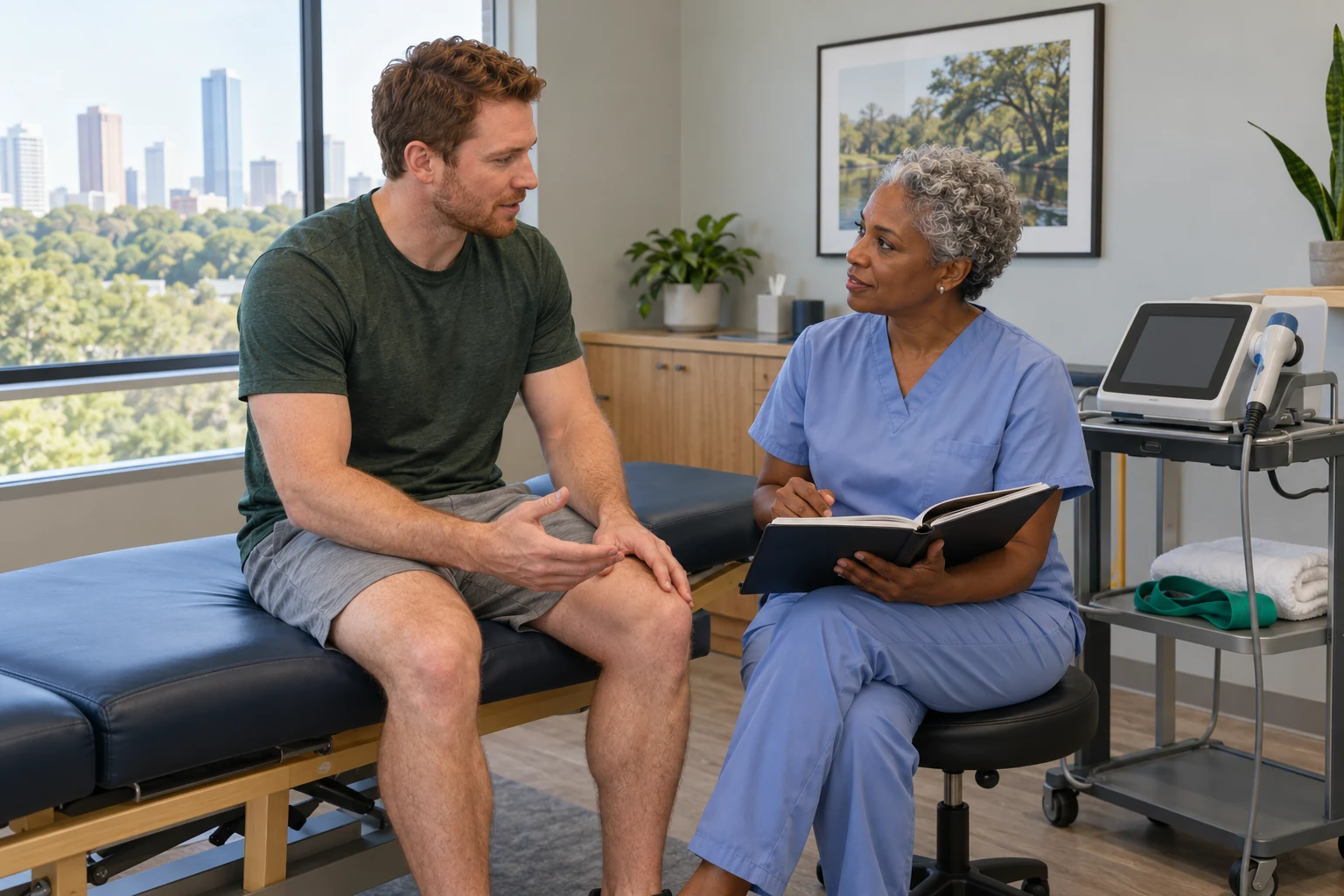
Each shockwave therapy session is a quick outpatient visit that usually lasts 15 to 30 minutes. At Regen 360 Aesthetics in Houston, your provider first checks in on your symptoms and progress since the last visit. The treatment area is then located, and a gel is applied to the skin to help the acoustic waves travel into the tissue. A handheld applicator delivers pulses to the painful area, and the intensity is adjusted to keep you as comfortable as possible. You may feel tapping, pressure, or brief discomfort during treatment. No needles or anesthesia are involved. Afterward, you can usually return to normal activities the same day. Mild soreness for 24 to 48 hours is common, and your provider will review home care and schedule your next session.
Can Shockwave Therapy Be Combined with PRP or Stem Cell Treatment?
Shockwave therapy can be combined with PRP or stem cell treatment for stubborn cases that have not responded fully to shockwave sessions alone. Some chronic tendon and joint problems involve tissue changes that benefit from more than one approach. In these situations, your provider may recommend adding PRP therapy, which uses concentrated platelets from your own blood, or a regenerative stem cell treatment designed to support tissue repair. Shockwave therapy may help prepare the area by improving circulation, while the injection delivers biologic support directly to the injured tissue. Many regenerative biologics are not FDA-approved to treat specific diseases, and results vary, so a combined plan is always based on a careful evaluation. Your provider will explain the timing, expected benefits, and costs before you decide.
Frequently Asked Questions: Shockwave Therapy Sessions in Houston, TX
How long does a shockwave therapy session take?
A shockwave therapy session usually takes 15 to 30 minutes from start to finish. The actual delivery of acoustic pulses often takes only part of that time, with the rest spent checking your symptoms, locating the treatment area, applying gel, and reviewing aftercare. Treating more than one area, such as both heels or a shoulder and an elbow, can make a visit slightly longer. Because there is no anesthesia, no needles, and no downtime, many patients schedule sessions before work, during a lunch break, or on the way home. This short visit length is one reason shockwave therapy fits easily into busy schedules. Most patients attend about once a week for 3 to 6 weeks, so the total time commitment for a full course of treatment stays manageable.
How soon after shockwave therapy will I feel better?
Many patients begin to feel better after 2 to 3 shockwave therapy sessions, although the timing varies from person to person. Some people notice a short-term drop in pain right after a session, while others feel gradual improvement over several weeks. Improvement often continues for weeks to a few months after the final session, because shockwave therapy supports a natural healing process that takes time. A temporary increase in soreness for 24 to 48 hours after a visit is common and usually not a sign that treatment is failing. Chronic conditions that have been present for a long time may take longer to respond than newer injuries. Keeping track of your pain, sleep, and activity levels can help you notice steady progress that might otherwise be easy to overlook.
What is the recovery like after shockwave therapy?
Recovery after shockwave therapy is usually quick, and most patients return to normal activities the same day. Mild soreness, redness, or tenderness in the treated area for 24 to 48 hours is common and typically fades on its own. As typical guidance, patients are often advised to avoid high-impact activity, such as running, jumping, or heavy lifting, for about 48 hours after each session. Walking and everyday tasks are generally fine. Your provider may also suggest gentle stretching or strengthening exercises to support healing between visits. Your provider will give you specific aftercare instructions based on your condition and activity level. If you notice unusual swelling, bruising, or pain that worsens instead of improving, contact the clinic so your provider can review your symptoms and adjust your plan.
Is shockwave therapy painful?
Shockwave therapy is usually described as uncomfortable rather than painful, and most patients tolerate it well. During treatment, you may feel tapping, pulsing, or pressure in the target area, and the sensation is often strongest over the most tender spot. Your provider can adjust the intensity during the session to keep you as comfortable as possible while still delivering effective treatment. The discomfort typically stops as soon as the applicator is removed. Afterward, mild soreness for 24 to 48 hours is common and tends to ease with rest and normal movement. Many patients find the sessions become easier over the course of treatment as their pain improves. If you are worried about comfort, mention it at your consultation.
How much does a full course of shockwave therapy cost in Houston?
Shockwave therapy in Houston typically ranges from $150 to $400 per session, so a full course of 3 to 6 sessions generally falls between about $450 and $2,400 in total. Where you land in that range depends on your condition, the number of areas treated, and how many sessions your provider recommends after evaluating you. A shorter course for a milder or more recent problem costs less, while a long-standing condition may need the full 6 sessions. If shockwave therapy is combined with PRP or stem cell treatment, the overall investment will be higher. Regen 360 Aesthetics offers financing options to make treatment more manageable. Your exact cost is confirmed during a complimentary consultation, once your provider understands your condition, goals, and the treatment plan that best fits your needs.
What happens if shockwave therapy does not work after 6 sessions?
If shockwave therapy has not provided enough relief after 6 sessions, your provider will reassess your condition before recommending more treatment. Keep in mind that improvement often continues for weeks to a few months after the final session, so it may be worth waiting a short time before deciding the treatment did not work. If progress remains limited, your provider may review imaging, look for other sources of pain, and consider whether factors such as footwear, training load, or home exercise need to change. For stubborn cases, combining shockwave therapy with PRP or a regenerative stem cell treatment may be an option. Results vary, and no single treatment works for everyone. A follow-up visit helps you decide on the next step, such as a different therapy or further evaluation.
